Sugar: a nutrient group with many faces
When most people hear the word sugar, the first thing they think of is the crystalline powder or white cubes in the sugar bowl at home. But this household sugar is just one of many other forms in which "sugar" occurs in nature and in our food.
Depending on the context in which the word is used, it can mean Different types of sugar with different properties hide. "Sugar" in recipes or in the list of ingredients on food packaging usually refers to normal granulated or household sugar (sucrose). Is from "Blood sugar" is first and foremost Glucose (dextrose) is meant.
Even statements such as "sugar is bad for your health" essentially only refer to certain types of sugar. It would be wrong to lump all forms of sugar into this category, as there are also a number of "intelligent sugars".
A short chemistry lesson
Sugars belong to the group of carbohydrates, which are often colloquially referred to as "sugar compounds". In fact, they include both the simplest small sugar molecules (simple sugars or monosaccharides) and larger sugar compounds composed of them, such as disaccharides, oligosaccharides or highly complex polysaccharides. However, the term "sugar" is generally only used for monosaccharides and disaccharides.
Overview: The most important carbohydrates
Fructose (fruit sugar)
Galactose (mucilage sugar)
Tagatose
Ribose
Lactose (milk sugar) (glucose + galactose)
Maltose (malt sugar) (glucose + glucose)
Isomaltulose (glucose + fructose)
Trehalose (glucose + glucose)
(galactose + glucose + fructose)
Glycogen (human glucose store)
Dietary fibers such as cellulose, pectin, quinine
How are sugars utilized in the intestine?
The body can only absorb simple sugars in the intestine. All other sugar compounds, whether simple sugars or complex carbohydrates, must first be absorbed with the help of Enzymes be broken down into their components. This starts partly in the mouth. Saliva contains the starch-splitting enzyme amylase, which splits the long glucose chains of starch into shorter fragments during chewing. You will notice this, for example, if you chew bread thoroughly for a few minutes. You will quickly notice how sweet it suddenly tastes.
However, the main part of carbohydrate digestion takes place in the small intestine. Here there are a number of special enzymes with different tasks. Some, such as pancreatic amylase, break down complex sugar chains such as starch into smaller fragments. Others, such as alpha-glucosidase, break these fragments down further into their simple sugar building blocks. Consequently, after digestion, nothing remains of the starch from bread, pasta, rice and potatoes other than individual glucose building blocks that pass into the blood. Some disaccharides even have their own Digestive enzymes such as maltase for malt sugar, lactase for lactose or trehalase for trehalose.
The subtle difference
Whether carbohydrates or sugars can be digested at all and how quickly this takes place depends in part on a tiny detail: the way in which the individual sugar building blocks are linked. Many digestive enzymes can only break down a certain type of bond or have a higher affinity for one type of bond than another. Dietary fibers such as cellulose or pectin, for example, are basically nothing more than carbohydrates that our intestines lack the enzymes to digest.
For some sugars, the type of binding is decisive, how quickly these are digested and like they therefore refer to the body. The two disaccharides sucrose and isomaltulose, for example, both consist of glucose and fructose and are digested by the same enzyme. Only the Different linking between the two sugar building blocks ensures that Isomaltulose clear Digests more slowly the released Glucose only bit by bit in the Blood circulation and the Blood sugar levels remain more stable as a result.
What does our body need sugar for?
Sugar have in the body Important functions. They are an important Energy source and essential Building blocks for various cell components. Just how important sugar is for the body is demonstrated by the fact that the body can produce this important fuel and building material itself and does not rely solely on dietary intake.
Fuel for brain and muscles
Sugar is a fast Energy supplier for the cells, especially for the Brain and muscle cells. The body mainly uses glucose for this, but can also utilize other sugars such as fructose or galactose to produce energy.
Glucose is broken down into pyruvate via a special metabolic process called glycolysis. This is then used in the power plants of the cells, the Mitochondria, to the Extraction of ATP is further metabolized. ATP (adenosine triphosphate) ultimately represents the actual energy source. Fuel for numerous Metabolic reactions such as substance transport, synthesis reactions, detoxification processes, regeneration programs, and so on.
ATP provides the energy for muscle contractions, for example. This enables us not only to perform at our best in sport, but also to beat our heart or perform the complicated facial muscle movements when we speak or smile. In order to cover the enormous demand for sugar and allow us to sprint straight away in an emergency, the Skeletal muscles about own sugar stores in the form of glycogen.
ATP also operates special pumps in the cell membranes, which permanently ensure a balance of positively and negatively charged ions inside and outside the cell. This is crucial for the "flow of electricity" in the nerve cells, for example, without which the brain would be as useful as a computer without electricity. Since the control center in the head resembles a high-performance computer, it is hardly surprising, that the brain constantly draws sugar from the blood to generate energy. This way consumed it about 150 g glucose (about 50 sugar cubes) a day, which is about 75% of the total sugar consumption at rest corresponds to. To cover the high demand of the brain alone, the Blood sugar level in a healthy body permanently kept constant and continuously from the Sugar storage (glycogen) in the Liverby newly formed glucose from Amino acids (protein building blocks) or with Sugar from the Food refilled.
But why do cells prefer to use sugar as an energy source when fats, with their higher calorie content, would be a more effective fuel? The answer is quite simple: producing energy from sugars means significantly less effort for cells. Especially the prefer the brain and muscles as major energy consumers the fast energy suppliers and only take effect with Sugar shortage to the Fat burning back.
Building block for the cells
Some sugars are essential components of Cell structures. Probably the most important place in this context is occupied by Ribose in it. This forms the backbone for the DNA strand on which our genetic material is stored. At the same time, it is an integral part of energy carriers (ATP, GTP) and co-factors (NADH, NADPH), which are responsible for are required for almost every metabolic pathway.
However, other sugars are also important for cell structure. Together with proteins, galactose forms so-called glycoproteins, which, for example, enable the exchange of information between cells or the reception of hormone signals.
Further topics
The book by Dr. Johannes Coy - FIT WITH SUGAR - currently no longer in stock - unfortunately his new book will soon be published on the German market and will then be available from us!
Stop cell ageing, keep the brain fit, protect the blood vessels and start burning fat with the right sugars.
A high consumption of conventional sugars poses various health risks. But it is also a fact that sugar plays an important evolutionary role for our bodies and, if used correctly, can even protect us from illness. Without the right sugars, we age faster, our mental performance declines earlier and our ability to concentrate and our blood vessels suffer.
Find out how you can maintain your physical and mental performance and minimize sugar-related health risks by using natural low-glycaemic sugars and sugar substitutes. This means you don't have to miss out on sweet treats even when following a ketogenic or low-carb diet.
Many delicious recipes for cakes, sweet snacks and desserts also show how easy it is to implement a sugar-conscious diet intelligently.

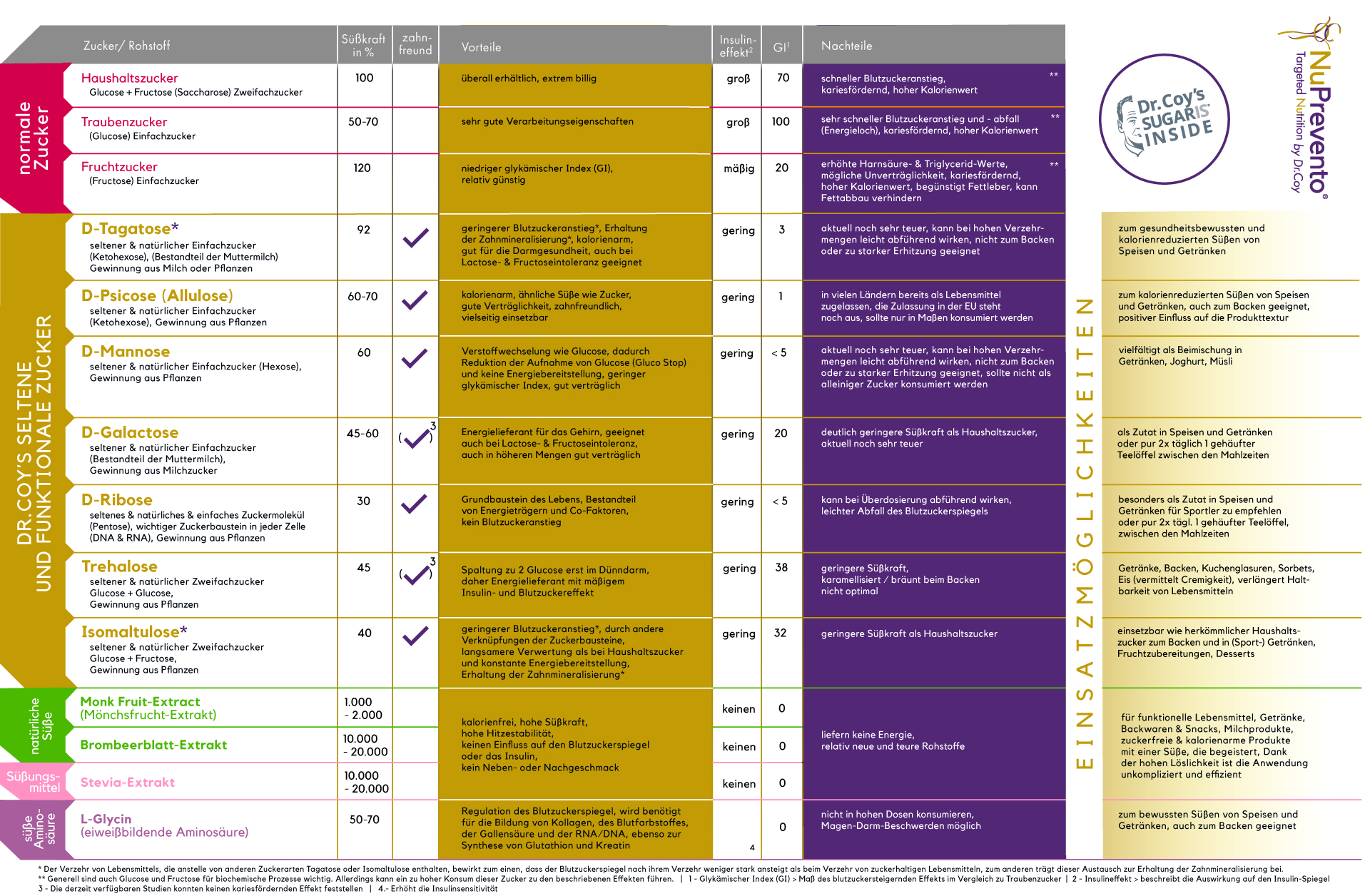
Overview: Sugar properties of sugars and sugar alternatives