
Dr. Coy's sugar: enjoy intelligently
Sugar has always been a double-edged issue: on the one hand, it provides quick energy for everyday life, sport and concentration, but on the other hand, it is often considered a trigger for obesity or dental damage. With Dr. Coy's sugars NuPrevento offers a selection of natural sugar variantswhich can be consciously used in the diet. They occur in pure form, are also found naturally in food and can be used specifically in the kitchen or for sports.
What makes sugar "intelligent"?
The special feature of Galactose, isomaltulose, tagatose, trehalose, ribose and Erythritol lies in their different properties. They can be used individually or in combination to bring pleasure, energy and everyday life into better harmony.
Consistent energy supply
Conventional sugars usually cause blood sugar levels to rise and fall quickly. Dr. Coy's sugar like Galactose, isomaltulose*, tagatose* and trehalose are processed more slowly and therefore provide energy over a longer period of time. This makes them interesting for situations in which constant performance is required - for example during sporting activity or mental work.
Tooth-friendly properties
While classic sugars are easily converted to acids by bacteria in the mouth, the Isomaltulose*, tagatose* and erythritol* as tooth-friendly. They are hardly or not at all utilized by caries-causing germs and therefore contribute less to acid formation. They are therefore also suitable for children and athletes who frequently consume sweets or drinks with an energy requirement.
Low-calorie sweetener alternatives
If you want to keep an eye on calories when sweetening, you will find Tagatose and Erythritol interesting options. Tagatose has a similar sweetening power to household sugar, but provides less energy. Erythritol is almost calorie-free, has a slightly cooling sweetening effect and is also well tolerated in larger quantities.
Overview: Sugar properties of sugars and sugar alternatives
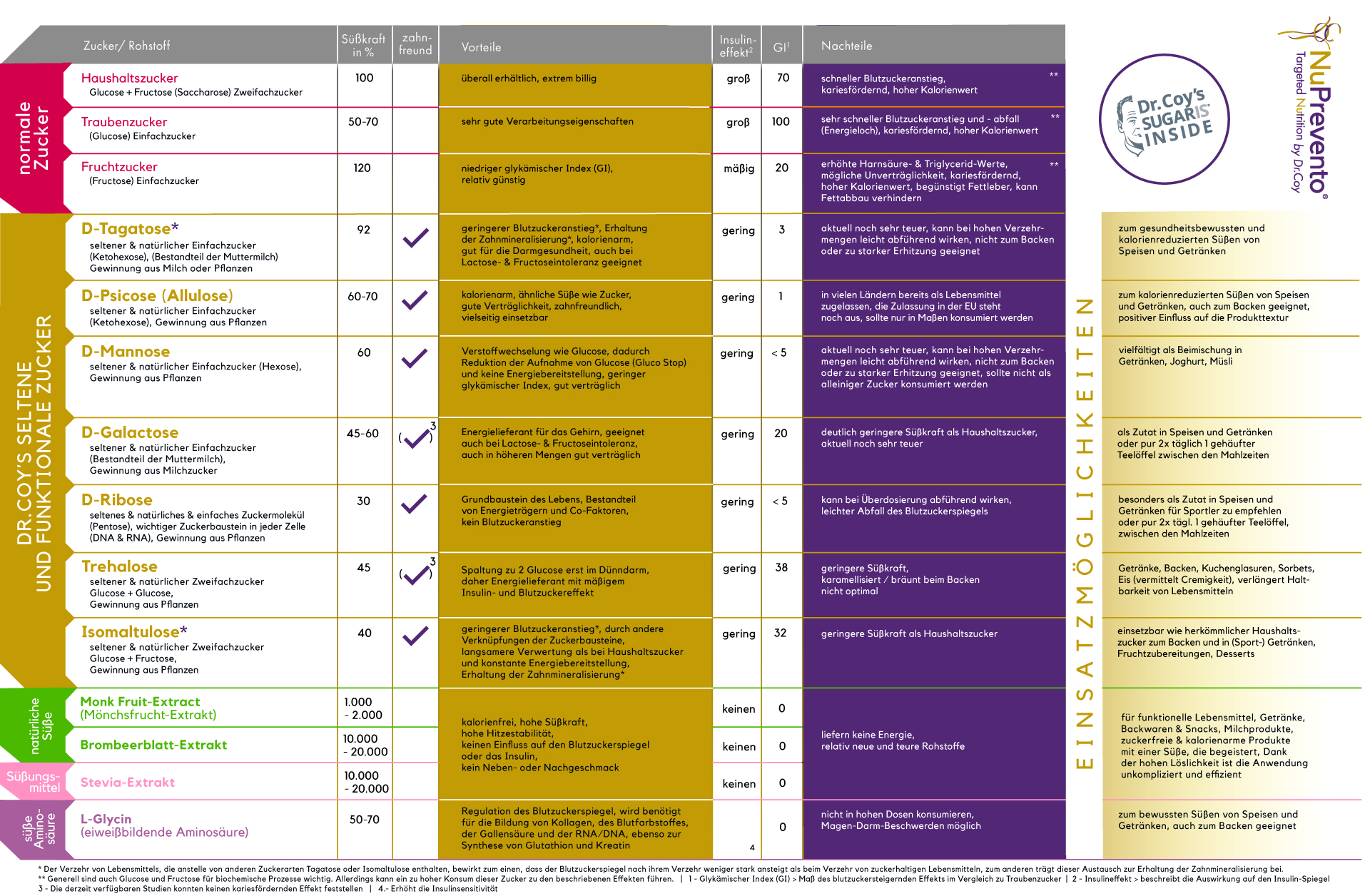
Find out more about the individual intelligent sugars
* The European Food Safety Authority (EFSA) confirms that the consumption of foods/drinks that contain other types of sugar such as tagatose, isomaltulose and erythritol instead of sugar: cause the blood sugar level to rise less after their consumption than when consuming sugary foods/drinks, and contribute to tooth mineralization.